
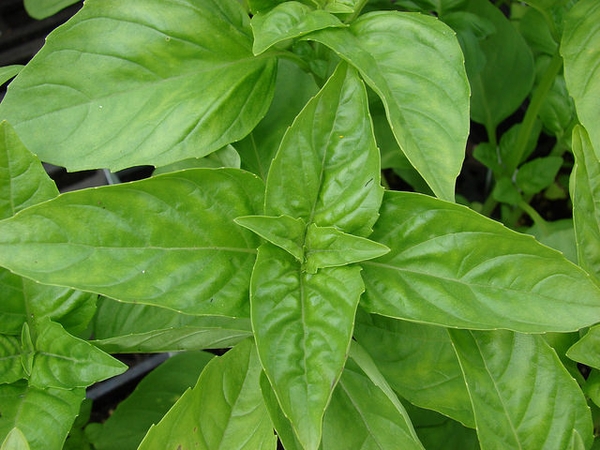
Basil can turn ripe tomatoes and a little olive oil into a meal worth lingering over. Ocimum basilicum belongs to the mint family and includes many culinary cultivars, from broad-leaved Genovese types to Thai basil. Their aromas differ, so choosing a basil is part of choosing the flavor of the dish. [1]
Origins, History, and Identity
Although closely associated with Italian cooking, sweet basil has tropical African and Asian origins. Its present-day culinary range is much wider than any one cuisine. Genovese and Thai basil are cultivars of this species; holy basil is a separate entry in the library. A familiar common name can conceal meaningful differences in aroma and growth. [1]
Culinary Uses and Flavor
Tear or chop leaves shortly before serving. Use tender stems where their texture suits the dish, and reserve woody stems for compost. Fresh basil works particularly well when it is added near the end, allowing the aroma to remain noticeable. Try it first with a simple tomato salad, then compare a different cultivar in the same recipe. Dried basil is useful, but it will not reproduce the texture or fragrance of a fresh handful.
Traditional Uses and What the Evidence Means
Basil’s use in food and traditional preparations should be discussed separately. A fragrant leaf is not evidence that a meal will boost immunity or treat infection. For this profile, flavor, variety selection, and good cultivation are the practical benefits.
Use leaves grown for eating and wash them before preparation. Refrigerate fresh basil mixtures containing dairy or other perishable ingredients promptly. Essential oil is not a substitute for the leaves in these recipes.
Growing and Harvesting
Plant after frost in a sunny spot with moist, well-drained soil. Pinch growing tips to encourage branching, and harvest regularly without stripping the whole plant. Basil is frost-sensitive; a cold-season indoor crop needs strong light. [1]
Buying and Storage
For cooking, choose clean leaves with a lively aroma and remove damaged material. Rinse under running water and dry before chopping. Keep only a modest supply on hand so you can enjoy the flavor at its best. Label dried herbs clearly and keep them away from light, moisture, and the heat above the stove.
Two Simple Recipes to Try
These original recipe suggestions are small, approachable ways to explore the flavor. They are culinary ideas, not medicinal preparations; adjust future batches to your taste.
Basil, Tomato, and Cucumber Salad
Serves 2; 10 minutes.
Ingredients
- 1 large cucumber, diced
- 1 cup cherry tomatoes, halved
- ¼ cup chopped fresh basil
- 1 tablespoon olive oil
- 2 teaspoons lemon juice
- A small pinch of salt
Method
- Wash and dry the vegetables and any fresh herbs. Cut everything just before assembling for the crispest texture.
- Mix the oil, lemon juice, salt, and seasoning in a bowl. Add the vegetables and toss gently.
- Taste and adjust before serving. Spoon alongside beans or grilled food, or fold into a warm flatbread. Refrigerate any leftovers promptly.
Basil and Lemon Butter
Makes 4 tablespoons; 10 minutes.
Ingredients
- 4 tablespoons softened unsalted butter
- 2 tablespoons finely chopped fresh basil
- ½ teaspoon finely grated lemon zest
- A small pinch of salt
Method
- Mix the butter with the seasoning, lemon zest, and salt until evenly combined.
- Spoon into a small covered dish and chill until ready to serve.
- Use a little on warm bread, steamed vegetables, or freshly cooked potatoes. Refrigerate leftovers promptly; this is a fresh spread, not a room-temperature preserve.
Frequently Asked Questions
Is Thai basil the same as holy basil?
No. Thai basil commonly refers to a cultivar of Ocimum basilicum. Holy basil, or tulsi, is usually Ocimum tenuiflorum.
Why does my basil become tall and sparse?
Regularly pinching growing tips encourages branching. Check that the plant also has enough light, moisture, and room to grow.
Explore the Herb Library
Continue exploring our Herbs & Spices Educational Guide, or browse basil in the Spirit of Wormwood store.
Have you grown this plant or encountered it in a favorite food tradition? Share your experience in the comments.
Sources and Further Reading
Botanical image: Ocimum basilicum Forest and Kim Starr CC BY 2.0. Source and original credit; image license. Original photograph retained; display sizes may be resized or cropped.
Leave a Reply