
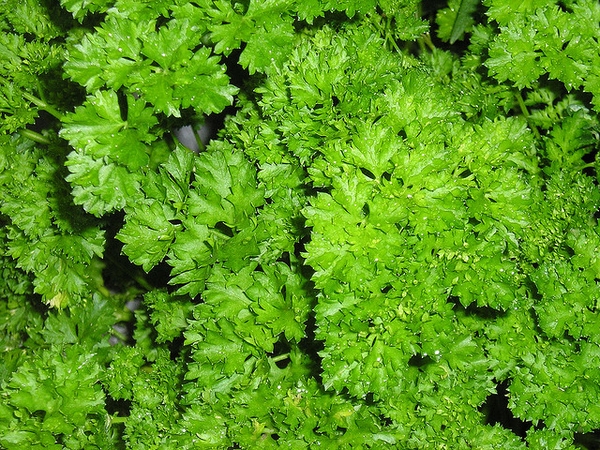
Parsley is worth treating as an ingredient rather than a decoration left on the plate. Petroselinum crispum supplies fresh green flavor in both flat-leaved and curly forms. A generous handful can turn a simple dressing or salad into something brighter without relying on strong heat or sweetness. [1]
Origins, History, and Identity
A Mediterranean member of the carrot family, parsley is a biennial commonly grown for its leaves in the first season. In its later flowering stage, it can become much taller. Flat-leaved and curly selections give cooks different textures, while root parsley is selected for another harvest altogether. The variety name helps explain the intended use. [1]
Culinary Uses and Flavor
Wash parsley well and dry it before chopping so it does not turn into a wet mass on the board. Tender stems can be finely chopped for a sauce, while tougher pieces can be reserved for a strained stock. Try a larger quantity than a decorative pinch in a salad or yogurt sauce. Its fresh character works particularly well with lemon and mild beans.
Traditional Uses and What the Evidence Means
Parsley has been used in traditional preparations, including products described as diuretic. That history should not be turned into advice to drink concentrated parsley preparations for kidney or urinary problems.
Use ordinary culinary leaves. Do not substitute parsley essential oil or seed extracts for a handful of fresh herb, and do not use an unfamiliar wild lookalike.
Growing and Harvesting
Give parsley fertile, consistently moist but well-drained soil in sun or light shade. Seed can be slow to germinate, so healthy transplants are convenient. Harvest outer growth while allowing the central plant to continue developing. [1]
Buying and Storage
For cooking, choose clean leaves with a lively aroma and remove damaged material. Rinse under running water and dry before chopping. Keep only a modest supply on hand so you can enjoy the flavor at its best. Label dried herbs clearly and keep them away from light, moisture, and the heat above the stove.
Two Simple Recipes to Try
These original recipe suggestions are small, approachable ways to explore the flavor. They are culinary ideas, not medicinal preparations; adjust future batches to your taste.
Parsley Garden Salad
Serves 2; 10 minutes.
Ingredients
- 1 large cucumber, diced
- 1 cup cherry tomatoes, halved
- ½ cup chopped fresh parsley
- 1 tablespoon olive oil
- 2 teaspoons lemon juice
- A small pinch of salt
Method
- Wash and dry the vegetables and any fresh herbs. Cut everything just before assembling for the crispest texture.
- Mix the oil, lemon juice, salt, and seasoning in a bowl. Add the vegetables and toss gently.
- Taste and adjust before serving. Spoon alongside beans or grilled food, or fold into a warm flatbread. Refrigerate any leftovers promptly.
Parsley Lemon Yogurt Sauce
Makes about 1 cup; 10 minutes.
Ingredients
- 1 cup plain Greek yogurt
- ¼ cup finely chopped fresh parsley
- 1 teaspoon lemon juice
- 1 teaspoon olive oil
- A small pinch of salt
Method
- Wash and dry any fresh herbs, then chop them finely. Measure the remaining ingredients into a bowl.
- Stir everything together, taste, and adjust the lemon or salt a little at a time.
- Let stand in the refrigerator for 10 minutes, then stir again before serving with vegetables, warm flatbread, or baked potatoes.
Frequently Asked Questions
Is flat-leaf parsley a different species from curly parsley?
Both are cultivated forms of Petroselinum crispum. Their texture and flavor intensity can differ.
Can I eat the stems?
Tender stems can be chopped finely. Remove coarse pieces when you want a smooth or delicate texture.
Explore the Herb Library
Continue exploring our Herbs & Spices Educational Guide, or browse parsley in the Spirit of Wormwood store.
Have you grown this plant or encountered it in a favorite food tradition? Share your experience in the comments.
Sources and Further Reading
Botanical image: Petroselinum crispum Anna CC BY 2.0. Source and original credit; image license. Original photograph retained; display sizes may be resized or cropped.
Leave a Reply