
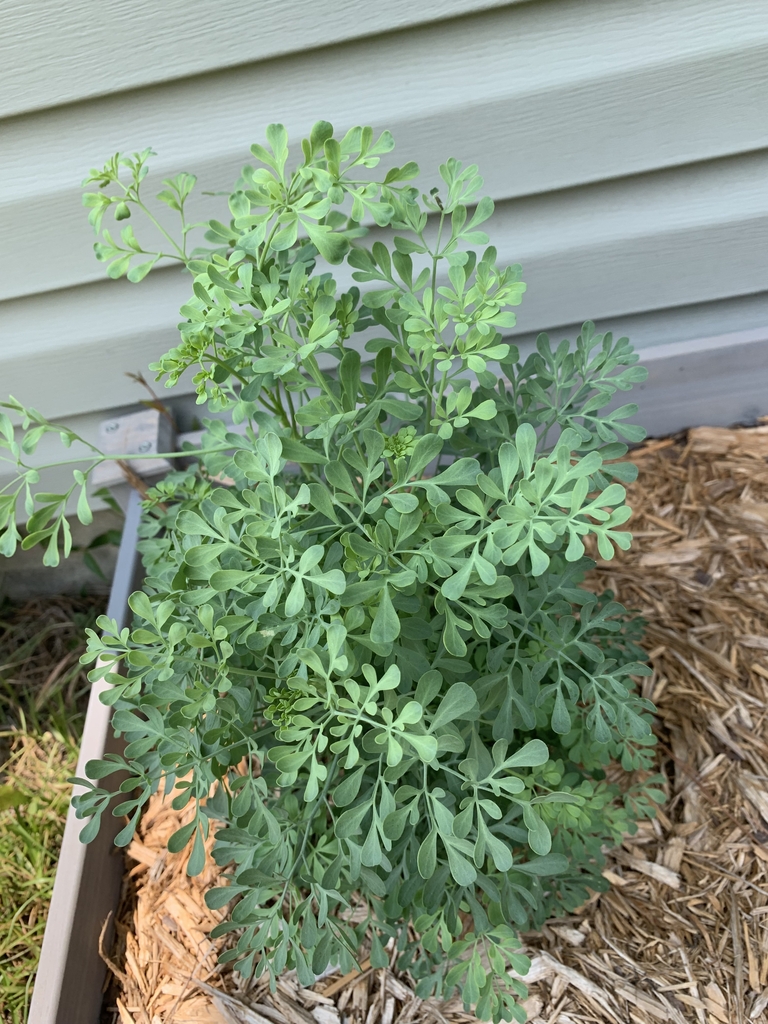
Rue is a plant to approach through history and horticulture with its hazards clearly in view. Ruta graveolens is a blue-green, aromatic subshrub in the citrus family. Its foliage and yellow flowers make it distinctive, but an attractive garden plant is not automatically an appropriate household herb to consume. [1]
Origins, History, and Identity
Native to southeastern Europe and the Balkans, rue has accumulated a long history of symbolic and herbal uses. It is now often grown as an ornamental and as a host plant for swallowtail butterflies. Historical references to food or medicine should not be read as an invitation to reproduce old preparations. [1]
Historical Uses and Modern Context
This profile does not provide rue food or tea recipes. Its toxic potential and skin effects make observation a more appropriate activity for a general audience. A garden label can explain the plant’s identity, habitat value, and historical reputation without encouraging tasting. Keep it clearly separated from herbs routinely clipped for meals.
Traditional Uses and What the Evidence Means
Rue’s historical medicinal use does not make it a safe digestive remedy. It is especially inappropriate during pregnancy. A botanical library can document its past while clearly rejecting the assumption that long use proves safety.
Rue can cause severe skin reactions, particularly with sunlight exposure, and ingestion can be toxic. Avoid handling bare-handed or preparing it for internal use. Do not use it for pregnancy-related purposes. [1]
Growing and Harvesting
Grow only where it can be placed thoughtfully, in sun to partial shade and well-drained soil. Choose a position away from frequently brushed paths and children’s play areas. Manage self-seeding and wear protective clothing when handling the plant. [1]
Buying and Storage
Keep rue plants and any gardening material clearly labeled and separate from culinary herbs. Use protective equipment for necessary handling, and store dried specimens where they cannot be confused with tea or seasoning. A clearly identified ornamental plant is still not a food ingredient.
Two Ways to Explore This Botanical
These original suggestions are starting points for your own observations.
Create a Clear Garden Label
About 15 minutes.
Materials
- A weatherproof plant label
- Permanent marker
- Reference notes
Method
- Write Ruta graveolens and the common name rue.
- Add a clear do-not-eat note and a reminder to avoid skin contact.
- Place the label where it can be read without touching the foliage.
Observe from a Comfortable Distance
A garden study.
Materials
- A rue plant in an appropriate location
- Notebook or camera
Method
- Observe the foliage and flower color without brushing against the plant.
- Record any butterfly or caterpillar activity without handling the insects or leaves.
- Use the observations to plan a garden layout that protects both wildlife and people using nearby paths.
Frequently Asked Questions
Can I make rue tea from a garden plant?
This profile does not recommend consuming rue. Its toxicity makes it unsuitable for casual household experimentation.
Why include it in the library at all?
Understanding a plant includes understanding its hazards. History, identification, and garden ecology are worthwhile subjects even when a plant is not recommended as food.
Explore the Herb Library
Continue exploring our Herbs & Spices Educational Guide, or browse rue in the Spirit of Wormwood store.
Have you grown this plant or encountered it in a favorite food tradition? Share your experience in the comments.
Sources and Further Reading
Botanical image: Form K. Andre CC BY 2.0. Source and original credit; image license. Original photograph retained; display sizes may be resized or cropped.
Leave a Reply