
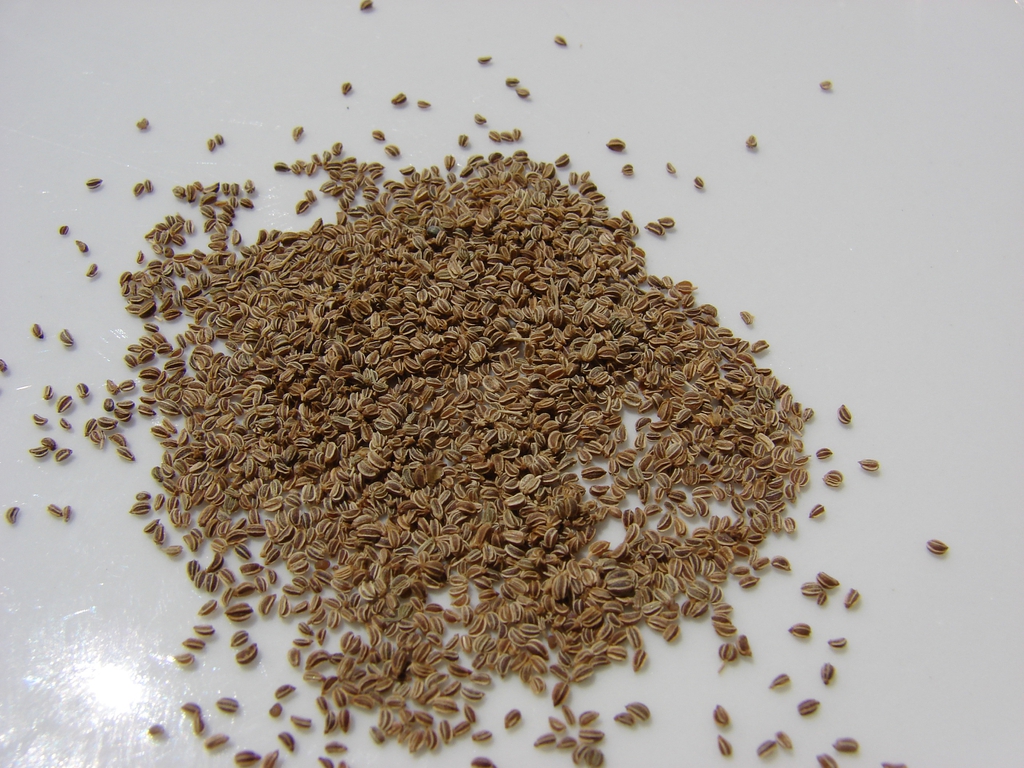
Celery seed packs a recognizable celery aroma into very small fruits. The spice comes from Apium graveolens, often associated with the smallage or wild-celery forms of the species. A few seeds can give a dressing, soup, or vegetable dish a savory accent without the watery crunch of a celery stalk. [1]
Origins, History, and Identity
The species belongs to the carrot family and has a broad temperate and Mediterranean history across parts of Europe, Africa, and Asia. Different cultivated forms emphasize stalks, roots, or aromatic fruits. Those forms explain how celery seed, familiar stalk celery, and celeriac can be closely related while serving very different purposes in a recipe. [1]
Culinary Uses and Flavor
Use whole seed for tiny bursts of flavor or grind it for a smoother mixture. Begin sparingly in a dressing, where a concentrated bitter edge is easier to notice. Celery salt is a separate product that includes salt; substituting it for seed changes the dish’s salt content. Keep the two jars clearly labeled, and season the finished food only after all salted ingredients are included.
Traditional Uses and What the Evidence Means
Celery seed is promoted for several wellness purposes, but a seasoning recipe does not establish treatment for joint pain or other symptoms. Seed supplements and food portions should be evaluated separately.
Celery can cause food allergy. Include the seed when checking an ingredient list for someone who avoids celery; the small quantity does not make it irrelevant.
Growing and Harvesting
Celery prefers moisture and fertile, well-drained soil. A seed crop requires the plant to flower and mature fruits rather than being harvested early for stalks. Buy the appropriate named variety and plan for its full life cycle. [1]
Buying and Storage
Buy a quantity you can use while its aroma is still appealing. Keep the container tightly closed in a cool, dark cupboard, and use a dry spoon when measuring. Label the purchase date. A faded aroma is a good reason to replace a spice rather than keep increasing the amount in a recipe.
Two Simple Recipes to Try
These original recipe suggestions are small, approachable ways to explore the flavor. They are culinary ideas, not medicinal preparations; adjust future batches to your taste.
Celery-Seed Slaw Dressing
Makes about ⅓ cup; 5 minutes.
Ingredients
- 3 tablespoons olive oil
- 1 tablespoon lemon juice or cider vinegar
- ¼ teaspoon celery seed
- 1 teaspoon honey or maple syrup
- A small pinch of salt
Method
- Measure the ingredients into a clean jar with a tight lid.
- Shake until blended, then taste on a leaf of lettuce rather than straight from the jar. Adjust the acidity or salt if needed.
- Toss with a simple salad just before serving, or spoon over cooked vegetables. Refrigerate unused dressing promptly and shake again before using.
Celery-Seed Lemon Potatoes
Serves 3–4; about 35 minutes.
Ingredients
- 1½ pounds potatoes, cut into 1-inch pieces
- 1½ tablespoons olive oil
- ¼ teaspoon celery seed, lightly crushed
- ¼ teaspoon salt
- 1 tablespoon lemon juice
Method
- Place the potatoes in a saucepan, cover with water, and simmer for 12–18 minutes until easily pierced with a fork. Drain well.
- Warm the oil in a large skillet over medium heat. Add the potatoes and cook for 8–10 minutes, turning occasionally, until golden at the edges.
- Remove from the heat and toss with the seasoning, salt, and lemon juice. Serve warm.
Frequently Asked Questions
Can celery salt replace celery seed?
Only with adjustment. Celery salt adds salt as well as flavor, and its proportions vary by product.
Can I sow seed from the spice jar?
It may have been processed or stored for food rather than germination. A labeled horticultural seed packet is the more dependable choice for growing.
Explore the Herb Library
Continue exploring our Herbs & Spices Educational Guide, or browse celery seed in the Spirit of Wormwood store.
Have you grown this plant or encountered it in a favorite food tradition? Share your experience in the comments.
Sources and Further Reading
Botanical image: Seeds Forest and Kim Starr CC BY 2.0. Source and original credit; image license. Original photograph retained; display sizes may be resized or cropped.
Leave a Reply