
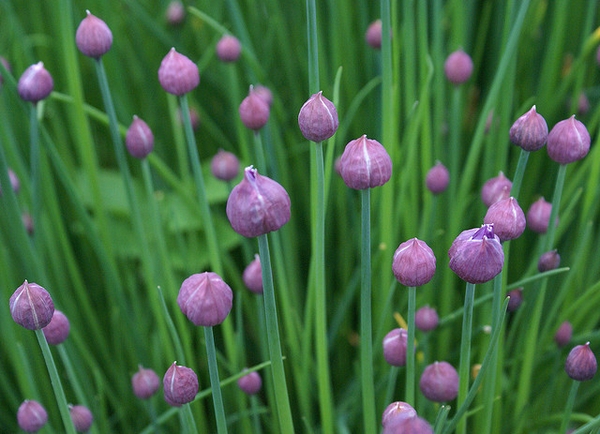
Chives bring a mild onion note in a form that is easy to snip straight into food. Allium schoenoprasum is a clumping perennial with narrow leaves and rounded purple flower heads. It earns its space in a small garden through both its edible harvest and its attractive flowering display. [1]
Origins, History, and Identity
Unlike many herbs with narrowly tropical origins, chives occur across a broad temperate range in the Northern Hemisphere. They belong to the same larger family as other familiar alliums. Common chives differ from garlic chives, which usually have flatter leaves and a more garlicky character. Keeping the names clear helps both cooking and plant selection. [1]
Culinary Uses and Flavor
Use clean scissors or a sharp knife to cut the leaves into small pieces. Add them near serving time to dips, cooked eggs, soups, or potatoes. Their mildness is part of the appeal: a scattering can make a plain dish more interesting without giving it a strong raw-onion bite. For flowers, use only blossoms from a plant grown as food and separate the florets before scattering them.
Traditional Uses and What the Evidence Means
An association with allium vegetables does not prove that a garnish of chives treats heart disease. The strongest reason to use them is their fresh flavor and the pleasure of harvesting a little food from a small space.
Use chives as a human food ingredient and keep allium-containing scraps away from pets. Wash the leaves, and use clean tools when harvesting from the garden.
Growing and Harvesting
Grow in sun to partial shade with well-drained soil. Harvest leaves from an established clump without removing all growth at once. Divide crowded clumps in a suitable cool season, and remove spent flowers if unwanted seedlings become a problem. [1]
Buying and Storage
For cooking, choose clean leaves with a lively aroma and remove damaged material. Rinse under running water and dry before chopping. Keep only a modest supply on hand so you can enjoy the flavor at its best. Label dried herbs clearly and keep them away from light, moisture, and the heat above the stove.
Two Simple Recipes to Try
These original recipe suggestions are small, approachable ways to explore the flavor. They are culinary ideas, not medicinal preparations; adjust future batches to your taste.
Fresh Chive Yogurt Dip
Makes about 1 cup; 10 minutes.
Ingredients
- 1 cup plain Greek yogurt
- 2 tablespoons finely snipped chives
- 1 teaspoon lemon juice
- 1 teaspoon olive oil
- A small pinch of salt
Method
- Wash and dry any fresh herbs, then chop them finely. Measure the remaining ingredients into a bowl.
- Stir everything together, taste, and adjust the lemon or salt a little at a time.
- Let stand in the refrigerator for 10 minutes, then stir again before serving with vegetables, warm flatbread, or baked potatoes.
Chive and Lemon Butter
Makes 4 tablespoons; 10 minutes.
Ingredients
- 4 tablespoons softened unsalted butter
- 2 tablespoons finely snipped chives
- ½ teaspoon finely grated lemon zest
- A small pinch of salt
Method
- Mix the butter with the seasoning, lemon zest, and salt until evenly combined.
- Spoon into a small covered dish and chill until ready to serve.
- Use a little on warm bread, steamed vegetables, or freshly cooked potatoes. Refrigerate leftovers promptly; this is a fresh spread, not a room-temperature preserve.
Frequently Asked Questions
Are chives the same as green onions?
No. Their flavor overlaps, but chives have much finer leaves and a different growth habit. They do not replace the bulk of chopped green onions.
Can I keep one plant for several years?
Yes. Chives are perennial where conditions suit them, and established clumps can be divided when crowded.
Explore the Herb Library
Continue exploring our Herbs & Spices Educational Guide, or browse chives in the Spirit of Wormwood store.
Have you grown this plant or encountered it in a favorite food tradition? Share your experience in the comments.
Sources and Further Reading
Botanical image: Flower buds Randi Hausken CC-BY-SA 2.0. Source and original credit; image license. Original photograph retained; display sizes may be resized or cropped.
Leave a Reply