
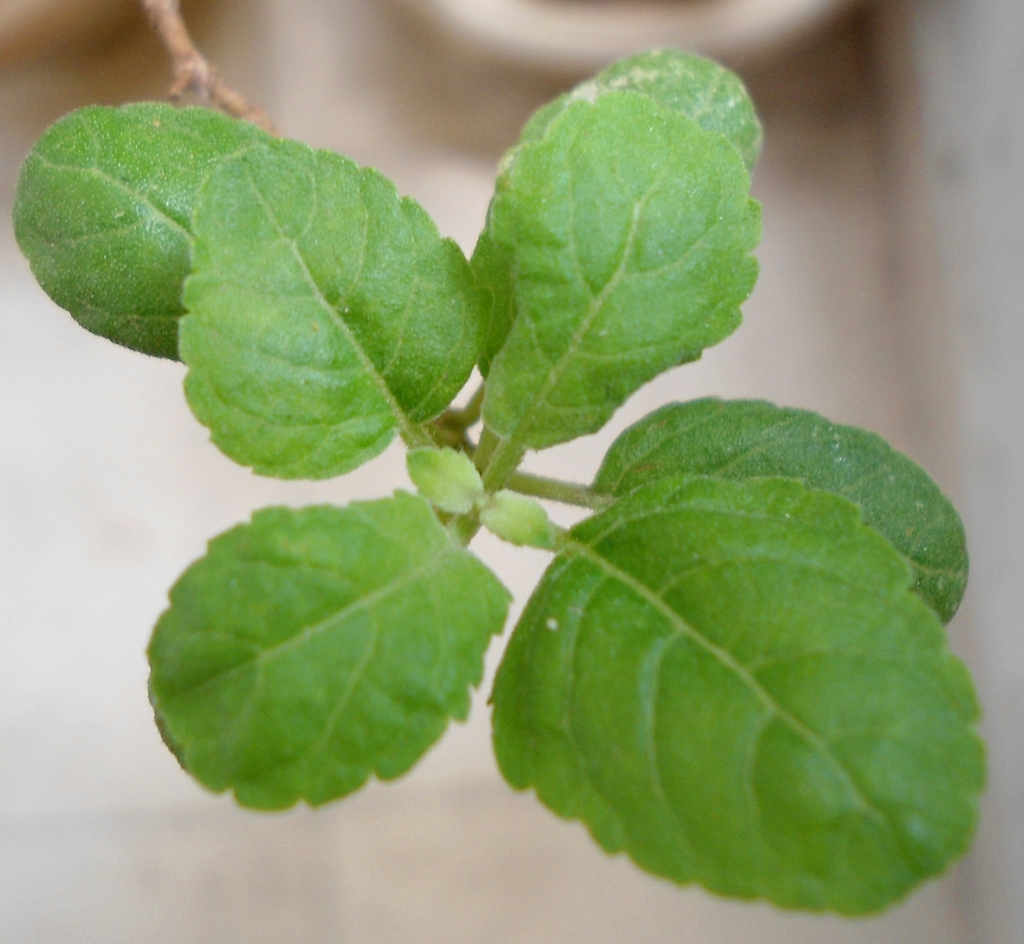
Holy basil, often called tulsi, has a spicy fragrance that gives it an identity of its own. Ocimum tenuiflorum is a mint-family herb or small subshrub related to sweet basil. It belongs in a botanical library both as an aromatic plant and as an ingredient whose cultural and herbal associations deserve careful description. [1]
Origins, History, and Identity
The plant is native to tropical and subtropical southern Asia and is widely grown beyond that region. It is commonly encountered under the name tulsi, while the older name Ocimum sanctum also appears in references. It should be distinguished from the Genovese and Thai cultivars of sweet basil rather than grouped with every plant sold as basil. [1]
Culinary Uses and Flavor
Choose a clearly identified culinary product and let its spicy herbal character guide the dish. A small quantity of fresh leaves can be tried in a yogurt sauce or over vegetables. Packaged tulsi teas should be prepared according to their directions. A strong herbal blend, a fresh leaf garnish, and an extract have different concentrations and should not be exchanged casually.
Traditional Uses and What the Evidence Means
The term adaptogen often appears in marketing for holy basil. It should not be read as a guarantee that a product treats stress or anxiety. This culinary profile does not establish therapeutic effectiveness or suggest a medicinal dose.
Use food-grade leaves and keep concentrated supplements separate from kitchen experiments. Ask a qualified clinician about herbal products when pregnant, breastfeeding, taking medicines, or managing a health condition.
Growing and Harvesting
Grow in sun with moist, well-drained soil and warmth. Avoid waterlogged conditions. A container helps manage its growth and makes it easier to provide protection in a cool climate. Monitor self-seeding where the plant grows vigorously. [1]
Buying and Storage
For cooking, choose clean leaves with a lively aroma and remove damaged material. Rinse under running water and dry before chopping. Keep only a modest supply on hand so you can enjoy the flavor at its best. Label dried herbs clearly and keep them away from light, moisture, and the heat above the stove.
Two Simple Recipes to Try
These original recipe suggestions are small, approachable ways to explore the flavor. They are culinary ideas, not medicinal preparations; adjust future batches to your taste.
Holy Basil Lemon Yogurt
Makes about 1 cup; 10 minutes.
Ingredients
- 1 cup plain Greek yogurt
- 1 teaspoon finely chopped fresh culinary holy basil
- 1 teaspoon lemon juice
- 1 teaspoon olive oil
- A small pinch of salt
Method
- Wash and dry any fresh herbs, then chop them finely. Measure the remaining ingredients into a bowl.
- Stir everything together, taste, and adjust the lemon or salt a little at a time.
- Let stand in the refrigerator for 10 minutes, then stir again before serving with vegetables, warm flatbread, or baked potatoes.
Aromatic Holy Basil Butter
Makes 4 tablespoons; 10 minutes.
Ingredients
- 4 tablespoons softened unsalted butter
- 1 teaspoon finely chopped fresh culinary holy basil
- ½ teaspoon finely grated lemon zest
- A small pinch of salt
Method
- Mix the butter with the seasoning, lemon zest, and salt until evenly combined.
- Spoon into a small covered dish and chill until ready to serve.
- Use a little on warm bread, steamed vegetables, or freshly cooked potatoes. Refrigerate leftovers promptly; this is a fresh spread, not a room-temperature preserve.
Frequently Asked Questions
Is tulsi the same as sweet basil?
Usually tulsi refers to holy basil, Ocimum tenuiflorum. Sweet basil is Ocimum basilicum, with a different range of culinary cultivars.
Can I replace all the basil in pesto with tulsi?
The result may be much stronger and different. Try a small sample before committing a whole batch.
Explore the Herb Library
Continue exploring our Herbs & Spices Educational Guide, or browse holy basil in the Spirit of Wormwood store.
Have you grown this plant or encountered it in a favorite food tradition? Share your experience in the comments.
Sources and Further Reading
Botanical image: Young plant Adityamadhav83 CC BY-SA 3.0. Source and original credit; image license. Original photograph retained; display sizes may be resized or cropped.
Leave a Reply