
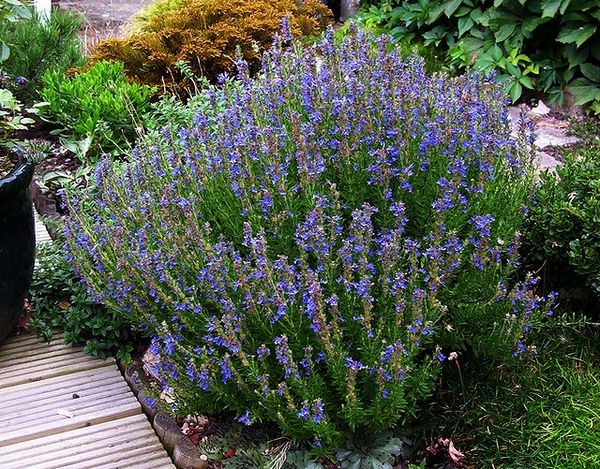
Hyssop, Hyssopus officinalis, is a compact aromatic plant with narrow leaves and summer flowers. A member of the mint family, it can serve as a small border plant as well as a subject for herbal history. Its name needs care: several unrelated plants are also called hyssop. [1]
Origins, History, and Identity
True hyssop is native across parts of southern and eastern Europe, northern Africa, and western Asia. It has a history in flavoring and herbal preparations, including use associated with liqueurs. Anise hyssop is an Agastache, a different genus. Ancient texts using a translated word hyssop cannot automatically be assumed to refer to this exact species. [1]
Culinary Uses and Flavor
NC State records culinary use of the foliage in soups and sauces, but the aroma can be assertive. Use only clearly identified culinary leaves and begin with a small amount. For a first exploration, a mild butter or yogurt sauce makes the flavor easy to assess. Essential oil is a separate, concentrated substance and is not the ingredient in either recipe below.
Traditional Uses and What the Evidence Means
Hyssop has been associated with respiratory preparations, but that history should not be presented as proof that it treats a cough or lung disease. A garden profile cannot establish the safety or effectiveness of a concentrated herbal product.
Hyssop essential oil can cause serious adverse effects, including seizures; do not ingest it as a home remedy. NIH LiverTox particularly notes concerns with seizure disorders and oil use in children. [2]
Growing and Harvesting
Choose a well-drained site with sun and some protection from harsh afternoon heat where needed. Trim in spring for a compact shape. Plants can be propagated from seed, cuttings, or division, and established plants tolerate some dryness. [1]
Buying and Storage
For cooking, choose clean leaves with a lively aroma and remove damaged material. Rinse under running water and dry before chopping. Keep only a modest supply on hand so you can enjoy the flavor at its best. Label dried herbs clearly and keep them away from light, moisture, and the heat above the stove.
Two Simple Recipes to Try
These original recipe suggestions are small, approachable ways to explore the flavor. They are culinary ideas, not medicinal preparations; adjust future batches to your taste.
A Hint of Hyssop Herb Butter
Makes 4 tablespoons; 10 minutes.
Ingredients
- 4 tablespoons softened unsalted butter
- ½ teaspoon finely chopped fresh culinary hyssop leaves
- ½ teaspoon finely grated lemon zest
- A small pinch of salt
Method
- Mix the butter with the seasoning, lemon zest, and salt until evenly combined.
- Spoon into a small covered dish and chill until ready to serve.
- Use a little on warm bread, steamed vegetables, or freshly cooked potatoes. Refrigerate leftovers promptly; this is a fresh spread, not a room-temperature preserve.
Mild Hyssop Yogurt Sauce
Makes about 1 cup; 10 minutes.
Ingredients
- 1 cup plain Greek yogurt
- ½ teaspoon finely chopped fresh culinary hyssop leaves
- 1 teaspoon lemon juice
- 1 teaspoon olive oil
- A small pinch of salt
Method
- Wash and dry any fresh herbs, then chop them finely. Measure the remaining ingredients into a bowl.
- Stir everything together, taste, and adjust the lemon or salt a little at a time.
- Let stand in the refrigerator for 10 minutes, then stir again before serving with vegetables, warm flatbread, or baked potatoes.
Frequently Asked Questions
Is hyssop the same as anise hyssop?
No. True hyssop is Hyssopus officinalis. Anise hyssop commonly refers to Agastache foeniculum.
Can I add a drop of the oil instead of leaves?
No. These are not equivalent preparations. The recipes specify a small amount of culinary leaf.
Explore the Herb Library
Continue exploring our Herbs & Spices Educational Guide, or browse hyssop in the Spirit of Wormwood store.
Have you grown this plant or encountered it in a favorite food tradition? Share your experience in the comments.
Sources and Further Reading
Botanical image: Hyssopus officinalis peganum CC-BY-SA 2.0. Source and original credit; image license. Original photograph retained; display sizes may be resized or cropped.
Leave a Reply